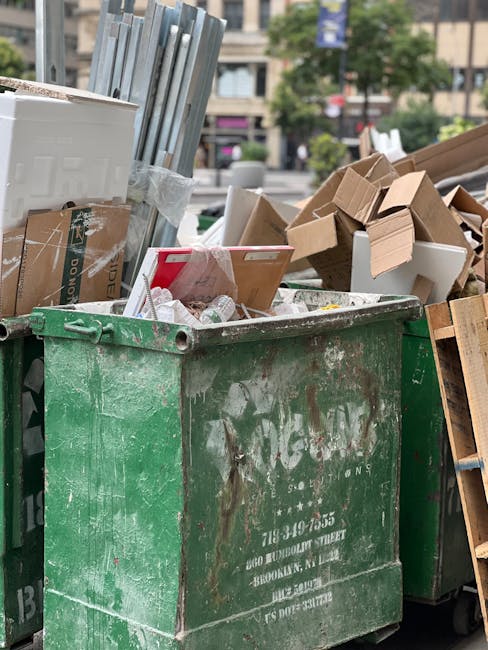
What to Do with Bulky Waste in Waterloo Flats: A Practical Guide for Residents, Landlords and Managing Agents
Bulky waste has a habit of appearing at the worst possible moment. One minute it is an old sofa blocking the hallway, the next it is a broken wardrobe that will not fit in the lift, and suddenly the flat feels smaller, messier, and a bit more stressful than it should. If you are wondering what to do with bulky waste in Waterloo flats, the answer depends on the item, the access, the timing, and whether you want the quickest route or the most cost-effective one.
This guide breaks everything down in plain English. You will find the main disposal options, the practical steps that save hassle, and the checks that help you avoid fines, damage, or awkward conversations with neighbours. Whether you are clearing a single item after a move or dealing with multiple pieces from a rental property, the goal is the same: get bulky waste out safely, legally, and without turning the building into a scene from a house-move disaster film.
For readers comparing service providers, it can also help to review practical details such as pricing and quotes, and if sustainability matters to you, their approach to recycling and sustainability is worth a look. Those two pages alone can make decision-making a lot clearer.
Expert summary: The best bulky waste solution for Waterloo flats is usually the one that balances building access, item type, urgency, and responsible disposal. In tight city properties, convenience and coordination often matter just as much as price. A little planning goes a long way.
Table of Contents
- Why Bulky Waste in Waterloo Flats Matters
- How Bulky Waste Disposal Works
- Key Benefits and Practical Advantages
- Who This Is For and When It Makes Sense
- Step-by-Step Guidance
- Expert Tips for Better Results
- Common Mistakes to Avoid
- Tools, Resources and Recommendations
- Law, Compliance, Standards, or Best Practice
- Options, Methods, or Comparison Table
- Case Study or Real-World Example
- Practical Checklist
- Conclusion
- Frequently Asked Questions
Why Bulky Waste in Waterloo Flats Matters
Flat living in Waterloo comes with real advantages: central location, good transport, and often a compact, efficient home. But bulky waste is where that efficiency can quickly turn into a problem. A mattress, armchair, bed base, or chest of drawers is not just "one item" in a flat. It becomes a logistics issue. Can it fit through the corridor? Will it scratch the walls? Is there lift access, or are you carrying it down stairs with a sharp bend halfway?
That is why bulky waste matters more in flats than in many houses. The space is shared, access is tighter, and one person's quick tidy-up can become another resident's blocked entrance or noisy lift delay. To be fair, most bulky item problems are not caused by bad intentions. They happen because people underestimate the size, weight, and awkwardness of disposal.
There is also the question of responsibility. If you leave bulky items in communal areas or outside at the wrong time, you can create fire safety concerns, trip hazards, and complaints from neighbours or building managers. In a busy area like Waterloo, with its mix of purpose-built flats, converted buildings, and managed blocks, that matters.
And then there is the environmental side. A sofa that could be reused or parts of a wardrobe that can be separated for recycling should not automatically end up in landfill. A sensible bulky waste plan helps you clear the flat, protect the building, and avoid wasting materials that still have a use.
How Bulky Waste Disposal Works
At its simplest, bulky waste disposal means removing items too large for standard household bins. In practice, there are several ways to do it, and the right one depends on your situation.
Most people in flats choose from four broad approaches:
- Council or local collection arrangements if available and suitable for the item.
- Private bulky waste removal for speed, access support, and larger clearances.
- Reuse or donation if the item is still in decent condition.
- Take-it-yourself disposal where access, transport, and timing make that realistic.
In a flat, the real challenge is often not the item itself but getting it out. A bulky waste service usually handles the lifting, carrying, loading, and transport. That can save a lot of stress if you live on an upper floor, have no parking nearby, or simply do not have the energy to dismantle a wardrobe after work on a wet Tuesday evening. We have all been there.
A good provider should also explain how items are separated, where possible, for reuse or recycling. If you want to understand the operational side better, their health and safety policy and insurance and safety information help show how a professional service approaches risk in shared buildings.
Key Benefits and Practical Advantages
When bulky waste is handled well, the benefits are obvious. Some are practical, some are financial, and some are just about peace of mind.
- Less disruption - no dragging heavy items through hallways or down stairwells.
- Lower risk of damage - fewer scuffs on walls, lifts, flooring, and door frames.
- Better building tidiness - especially important in communal entrances and shared bins areas.
- Faster room clearance - useful for moving out, letting a property, or making space for furniture delivery.
- More responsible disposal - items can be sorted for recycling or reuse where appropriate.
- Less personal stress - honestly, this one matters more than people admit.
There is also a subtle but important advantage for landlords and agents: smoother turnover. If a flat can be cleared quickly after a tenancy ends, the next stage of cleaning, repair, and re-letting can start sooner. In a rental market, that timing can make a real difference.
For occupiers, the benefit may simply be getting your space back. A room with one old mattress and a broken sideboard can feel oddly stuck. Clear those items, and suddenly the flat breathes again.
Who This Is For and When It Makes Sense
This topic is relevant to a few different groups, and each has slightly different needs.
Residents in Waterloo flats
If you are replacing furniture, downsizing, moving out, or clearing out clutter, bulky waste disposal is probably the cleanest solution. It makes sense when the item is too large for normal bin collection and awkward to move on your own.
Landlords and letting agents
Turnover between tenancies often produces bulky waste. Old mattresses, damaged wardrobes, broken desks, and leftover white goods can all need removing fast. A prompt clearance protects the property and helps present it well for viewings.
Managing agents and building teams
Shared buildings need consistency. If residents leave items in corridors, bin stores, or outside the entrance, someone has to deal with it. A reliable disposal plan reduces complaints and avoids messy common areas.
People handling bereavement or major life changes
Sometimes bulky waste disposal sits inside a bigger emotional job: sorting a relative's flat, preparing for a move after separation, or clearing a room after illness. In those moments, convenience and discretion matter a great deal. You do not need extra friction.
It makes sense whenever the item is heavy, awkward, urgent, or potentially reusable but not worth the effort of moving yourself. The key question is not just can you get rid of it, but how much time, effort, and risk that choice creates.
Step-by-Step Guidance
Here is a practical way to handle bulky waste in a Waterloo flat without overcomplicating things.
- Identify the item or items
List what needs removing. Include size, weight, material, and condition. A broken sofa is not the same as a dismantled bed frame, and the disposal route may differ. - Check access
Measure doorways, stair turns, lift size, and any narrow points. In some buildings, the item can come out only if it is dismantled first. Truth be told, this is where many people discover the real problem. - Separate reusable or recyclable parts
If the item can be broken down safely, remove cushions, drawers, metal fixings, or mixed materials that may be handled differently. - Decide on the disposal route
Choose between council collection, private removal, donation, or self-disposal. If you need help assessing the most suitable option, start with a quote page like pricing and quotes so you can compare the likely costs and service scope. - Prepare the building route
Protect floors if needed, book lift access if your building requires it, and warn neighbours if the item is awkward or the collection may be noisy. - Set a collection point
If permitted, move the item to a place that does not block fire exits, hallways, or communal access. Never assume the entrance lobby is acceptable. - Confirm what happens after collection
Responsible services should make clear how items are handled and whether recycling or reuse is part of the process. If sustainability is a priority, review their recycling approach.
If the item is especially bulky or the building has awkward access, it is often wiser to book help than to improvise. A two-person lift and a trolley can be a world away from a solo attempt and a rolled-up rug.
Expert Tips for Better Results
A few small choices can make the whole process smoother. These are the things people often miss until they are standing in the hallway wondering why the wardrobe has suddenly become larger than the doorway.
Measure before you move
Do not guess. Measure the item, and measure the route out. That includes the width at the tightest point, not just the main corridor. A common mistake is assuming that because something came in one piece, it can leave the same way. Not always.
Dismantle where it reduces risk
Breaking down a bed frame or table can make disposal easier, but only if it is safe to do so. Keep screws, fittings, and sharp edges contained. A bag of loose bolts rolling across a communal floor is nobody's idea of progress.
Think about timing
Morning collections can be easier if you want to avoid busy lift use or afternoon foot traffic. Late afternoon can work too, but in a block with heavy resident movement, the day can become a juggling act.
Ask about handling special items
Some bulky waste is not just bulky. It may be upholstered, electrical, metal-heavy, or mixed-material. That affects treatment. If you have a sofa bed, for example, it may need different handling from a plain armchair.
Use a service that respects the building
Good operators protect surfaces, minimise disturbance, and behave properly in shared spaces. That sounds obvious, but in flats it really matters. A rushed team can create more trouble than the waste itself.
For extra reassurance, it is sensible to review a provider's health and safety standards and insurance cover before booking. In a shared residential setting, that is not overcautious. It is sensible.
Common Mistakes to Avoid
Most bulky waste problems are avoidable. The usual mistakes are predictable, which is useful because you can sidestep them pretty easily.
- Leaving items in communal areas without permission or for too long.
- Forgetting access restrictions such as lift bookings, concierge hours, or loading bay rules.
- Assuming everything can go together without sorting for reuse, recycling, or specialist disposal.
- Trying to move something too heavy alone, which risks injury and damage.
- Choosing the cheapest option without checking what is included.
- Ignoring the building rules because "it will only be there for an hour". Famous last words, sometimes.
- Not confirming disposal paperwork or service details where documentation matters for landlords or agents.
A quieter but important mistake is waiting too long. The longer bulky waste sits around, the more it interrupts cleaning, decorating, and everyday life. One old sofa can somehow dominate a whole flat. Funny, really. Not funny.
Tools, Resources and Recommendations
You do not need a warehouse of equipment to deal with bulky waste, but a few practical tools help.
- Measuring tape for doors, lifts, and the item itself.
- Work gloves for grip and basic protection.
- Furniture sliders or a dolly if you are shifting lightweight items across flat flooring.
- Heavy-duty bags for screws, fittings, soft furnishings, and loose parts.
- Basic toolkit for dismantling beds, tables, and shelving.
- Blankets or floor protection to reduce scuffs in hallways.
For service-level clarity, review provider pages that explain business practices, especially if you are comparing options or arranging access in a managed building. Helpful pages include payment and security information and the company's complaints procedure, which can give you a clearer sense of how they operate if something does not go to plan. That sort of transparency matters more than people think.
If you need an accessible website or service detail for internal stakeholders, you can also check the accessibility statement. It is a small thing, but useful for organisations with varied users or residents.
Law, Compliance, Standards, or Best Practice
Bulky waste in flats is not just a tidiness issue. There are practical and legal considerations too, especially in the UK context. The exact rules can vary depending on the property, local authority arrangements, lease terms, and the nature of the waste, so it is sensible to avoid blanket assumptions.
As a general best practice, bulky items should be disposed of through lawful channels and not abandoned in shared spaces, next to bins, or on the pavement unless a proper collection has been arranged. In apartment buildings, lease conditions or building rules may also restrict where items can be stored before pickup.
If a service is removing waste on your behalf, it is reasonable to expect them to act responsibly with loading, transport, and onward handling. For business and landlord users, it also helps to work with a provider that is clear about insurance, safety, and responsible disposal methods. If you want to understand the approach better, their modern slavery statement and wider compliance pages show a commitment to transparent business practices, which is a good sign in any supplier relationship.
Best practice also means protecting neighbours and the building itself. Keep exits clear. Avoid obstructing fire routes. Do not leave sharp edges exposed. And if you are unsure whether an item needs special handling, ask before moving it. That simple step can prevent a lot of mess later.
Options, Methods, or Comparison Table
Here is a practical comparison of the main ways to deal with bulky waste in Waterloo flats.
| Option | Best for | Advantages | Watch-outs |
|---|---|---|---|
| Council or local collection | Single items or straightforward removals | Often suitable for simple needs and routine disposal | May have booking limits, access constraints, or item restrictions |
| Private bulky waste removal | Fast turnaround, awkward access, multiple items | Convenient, flexible, less physical effort for residents | Usually costs more than doing it yourself |
| Donation or reuse | Items in good, usable condition | Extends item life, reduces waste, can help others | Not every item qualifies; collection and acceptance rules vary |
| Self-disposal | People with transport, time, and access | Can be cost-effective if you already have a suitable vehicle | Labour-intensive, risky in flats, and not always practical |
The "best" choice is not always the cheapest. In a flat, time, access, and the risk of damage often matter more than a small difference in cost. If the lift is tiny, the stairs are narrow, or the item is particularly awkward, professional removal may actually be the smarter value.
Case Study or Real-World Example
Imagine a tenant in a Waterloo flat moving out at the end of a tenancy. The flat has a worn two-seater sofa, an old mattress, and a broken coffee table that has already been patched once with tape. None of it is glamorous, and none of it is easy to shift.
The building has a narrow lift, a shared entrance, and limited parking. The resident could try to move everything over two weekends, but that would mean multiple trips, more disruption, and a fair chance of scraping a wall on the way out. Instead, they measure the lift, confirm the route, take a few minutes to dismantle the table, and book a removal service that understands residential access.
The items are collected in one visit. The hallway stays clear, the neighbours are not disturbed for long, and the flat is ready for cleaning the same day. Simple, really, but not accidental. The planning is doing the heavy lifting here, not the sofa.
That kind of scenario is common in Waterloo. The exact details change, but the pattern is the same: small spaces reward careful coordination.
Practical Checklist
Use this checklist before arranging bulky waste removal from a Waterloo flat.
- Identify every item that needs removing.
- Check whether any items can be reused, donated, or recycled.
- Measure the item and the access route out of the flat.
- Confirm lift use, stair access, parking, and any building rules.
- Decide whether you need help dismantling the item.
- Book a collection time that suits the building and your schedule.
- Protect floors and walls where necessary.
- Keep communal spaces clear and do not block fire exits.
- Confirm how the item will be handled after collection.
- Keep any payment, quote, or booking details accessible.
Quick takeaway: If the item is heavy, awkward, or likely to damage the building, the safest option is usually the one that removes it in one controlled visit.
Conclusion
Knowing what to do with bulky waste in Waterloo flats saves time, prevents damage, and makes life a lot easier in a building where space is already at a premium. The key is to treat bulky waste as a logistics task, not just a tidying job. Measure first, check access, choose the right disposal route, and think about the building as well as the item.
For many residents, the simplest answer is professional removal, especially where stairs, lifts, or shared entrances make the job awkward. For others, donation or a planned collection may be the better fit. Either way, a little care at the start prevents a much bigger headache later.
If you are comparing options, reviewing service details, or just trying to work out the best next step, it helps to look at pricing information, safety standards, and the provider's recycling commitments before you commit. That way, you are not guessing. You are choosing calmly, with the facts in front of you.
Get a free quote today and see how much you can save.
And once the bulky waste is gone, the flat often feels lighter in more ways than one. Fresh space. Less clutter. A small reset, but a meaningful one.
Frequently Asked Questions
What counts as bulky waste in a flat?
Bulky waste usually means items too large for normal household bins, such as sofas, mattresses, wardrobes, tables, and large appliances. In flats, the term often covers anything awkward to move through shared access areas.
Can I leave bulky waste in the communal hallway overnight?
Usually not unless your building rules or managing agent explicitly allow it. Communal hallways need to remain clear for safety and access, and leaving items there can create complaints or hazards.
Is it cheaper to move bulky waste myself?
Sometimes, yes, but only if you already have suitable transport, enough help, and easy access. In a flat, the hidden cost is often the time, effort, and risk of damage, so the cheapest option is not always the best value.
What if the item will not fit in the lift?
If it will not fit in the lift, you may need to dismantle it or use a service that can remove it safely by stairs. Measure carefully before you start. Guessing here is how people end up stuck halfway through the day with a sofa in the stairwell.
Can old furniture be recycled?
Often parts of it can be, depending on the materials and condition. Wood, metal, fabric, and foam may be handled differently. A good disposal service should explain how items are sorted where recycling is possible.
What should landlords do with leftover bulky items after a tenancy?
Landlords should arrange prompt removal so the property can be cleaned, checked, and prepared for the next occupant. It is sensible to document the condition of items and confirm removal details for the property record.
Do I need to book a collection in advance?
In most cases, yes. Advance booking helps coordinate access, parking, and timing. In a shared building, a short bit of planning can save a lot of disruption.
What happens if bulky waste is left outside the building without permission?
It may be treated as fly-tipping or a building rule breach, depending on the circumstances and local arrangements. At best, it causes inconvenience; at worst, it may lead to fines or removal costs.
How do I know if a removal company is trustworthy?
Look for clear pricing, safety information, insurance details, and transparent policies. It also helps if the company explains payment methods and how complaints are handled. Those signals usually tell you a lot.
Can I donate bulky items instead of throwing them away?
Yes, if the item is in good enough condition and a charity, reuse organisation, or recipient can actually accept it. Donation is a great option, but only when the item is clean, usable, and practical to move.
How quickly can bulky waste usually be removed from a Waterloo flat?
That depends on access, item size, and service availability. Simple removals can often be arranged quickly, while more complex jobs may need extra coordination. The main thing is to be clear about the access situation from the start.
What is the safest way to move a heavy item down stairs?
The safest way is usually to avoid doing it alone, use proper lifting technique, and seek help if the item is large or awkward. If there is any doubt at all, professional removal is the safer choice. A bruised shin is annoying; a damaged wall or injury is a much bigger problem.